

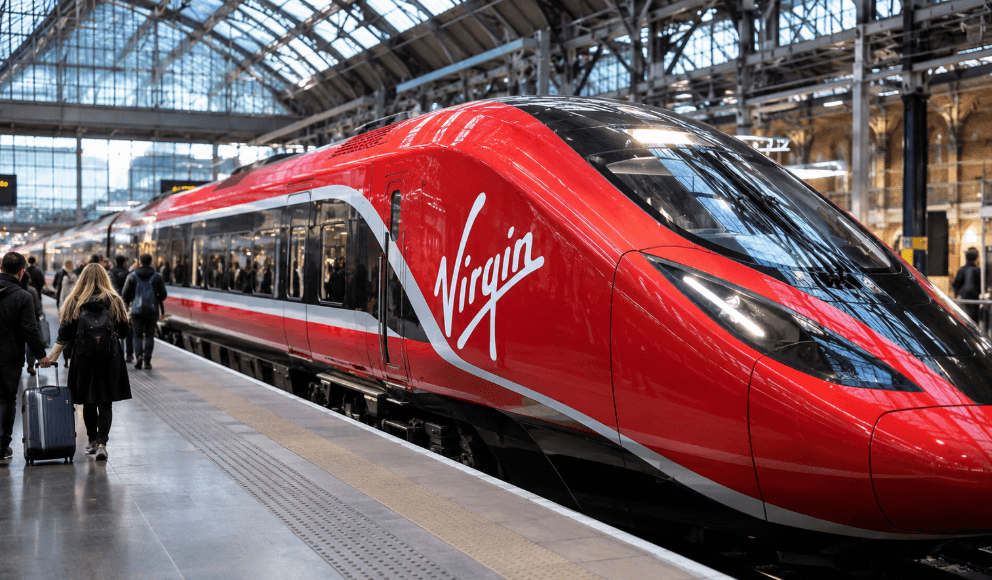
Virgin Group has revealed its plans for a new generation of cross-Channel high-speed trains as it prepares to enter the international rail market and compete directly with Eurostar. The company aims to launch services connecting London with major European cities in 2030, promising a different passenger experience inspired by its airline, cruise and hotel businesses.
The proposed network could significantly increase rail capacity between the UK and continental Europe, providing passengers with more choice on routes that have long been dominated by Eurostar.
Virgin Targets 2030 Launch for European High-Speed Rail Services
Virgin is preparing to introduce international passenger services linking London with Paris, Brussels and Amsterdam from 2030.
The company has ordered 12 high-speed trains from French manufacturer Alstom, with the new fleet expected to reach speeds of up to 190mph (300km/h), comparable with Eurostar’s existing services.
Virgin’s strategy centres on combining competitive journey times with upgraded interiors, improved catering and a more flexible onboard environment.
The company has unveiled a mock-up of its proposed train design, offering an early indication of how it intends to distinguish its services from established European rail operators.
New Services Could Add 7.5 Million Passenger Seats Annually
Virgin expects to operate 20 daily return services across its planned international network.
The expansion is projected to introduce almost 7.5 million additional seats annually to the cross-Channel rail market, while potentially creating up to 1,000 jobs.
The proposed services would represent a significant development for international rail travel from London, where Eurostar has operated without direct competition through the Channel Tunnel since its opening in 1994.
Virgin believes additional capacity could encourage more passengers to choose rail for journeys between Britain and mainland Europe.
Train Interiors to Draw Inspiration From Virgin Atlantic and Virgin Hotels
Passenger experience will be a central element of Virgin’s plans, with the company looking beyond conventional railway design for inspiration.
The proposed trains will incorporate concepts from Virgin Atlantic, Virgin Voyages and Virgin Hotels, bringing together elements of the group’s wider travel and hospitality operations.
Virgin Atlantic’s airport Clubhouses are expected to influence both pre-departure facilities and onboard social areas.
The company has indicated that these spaces will offer passengers greater flexibility to work, relax or socialise during their journeys.
Enhanced Dining and Social Spaces Under Consideration
Virgin is also exploring catering concepts inspired by its cruise business, potentially introducing a different approach to food and drink on international rail services.
Design influences from Virgin Hotels are expected to shape the trains’ interiors, although the company has not yet disclosed detailed specifications.
The possibility of dedicated social areas, including a bar, forms part of the broader vision, but final onboard facilities have not been confirmed.
The initiative builds on Virgin’s previous involvement in British rail, including its operation of intercity services before leaving the UK rail franchise market in 2019.
Virgin Group Sees Opportunity to Expand International Rail Travel
Josh Bayliss, chief executive of Virgin Group, said the project would draw on the company’s experience across several travel sectors.
“Virgin has a proud history in UK rail. With our latest venture we are drawing on more than four decades of experience across travel and hospitality to create something genuinely new.
“We’re confident that more journeys between the UK and Europe will be made by train. We’re adding capacity for millions more international rail journeys each year, growing the market as a whole. We’re looking forward to seeing our distinctive red and black trains travelling across Europe.”
Rail and Airline Connections Could Offer Additional Benefits
Virgin is also considering closer integration between its rail services and Virgin Atlantic’s airline network.
This could allow passengers travelling from France and other European destinations to connect with international flights operated by Virgin Atlantic.
The proposed rail operation is also expected to join Virgin’s existing loyalty programme, enabling passengers to earn points that could be used across other Virgin travel services.
Regulatory Progress Supports Virgin’s Cross-Channel Ambitions
Virgin’s preparations have advanced following developments involving the Office of Rail and Road (ORR), the UK’s railway regulator.
On Thursday, 8 October, the ORR published an agreement with Eurostar allowing Virgin to maintain its trains at the Temple Mills international depot near Stratford in east London.
Access to maintenance facilities is a crucial requirement for operators planning to run international services through the Channel Tunnel.
Virgin has also secured UK track access until at least 2040, providing a longer-term framework for its proposed operations.
Trenitalia Also Preparing to Enter the Cross-Channel Market
Virgin is not the only company seeking to challenge Eurostar’s position.
Italian state-owned railway operator Trenitalia is also expected to introduce high-speed passenger services through the Channel Tunnel.
Trenitalia already operates international rail services reaching Paris and has announced a €2 billion order for 19 new trains from Hitachi.
Some of these trains are expected to be based in France and deployed on routes connecting continental Europe with London.
The emergence of multiple potential operators could reshape the market by increasing passenger capacity and creating greater competition over fares, service quality and travel options.
Outlook for UK–Europe Rail Competition
Virgin’s proposed 2030 launch marks a significant step towards greater competition in cross-Channel passenger rail.
With new rolling stock ordered, maintenance arrangements progressing and long-term track access secured, the company is establishing the foundations for its international network.
The success of the venture will depend on delivering reliable services and attracting passengers in a market where Eurostar remains firmly established.

George Orwell is a writer and contributor covering politics, society, culture, and current affairs. His work focuses on providing clear analysis and thoughtful commentary on the issues shaping modern Britain and the wider world, helping readers better understand complex topics.

