

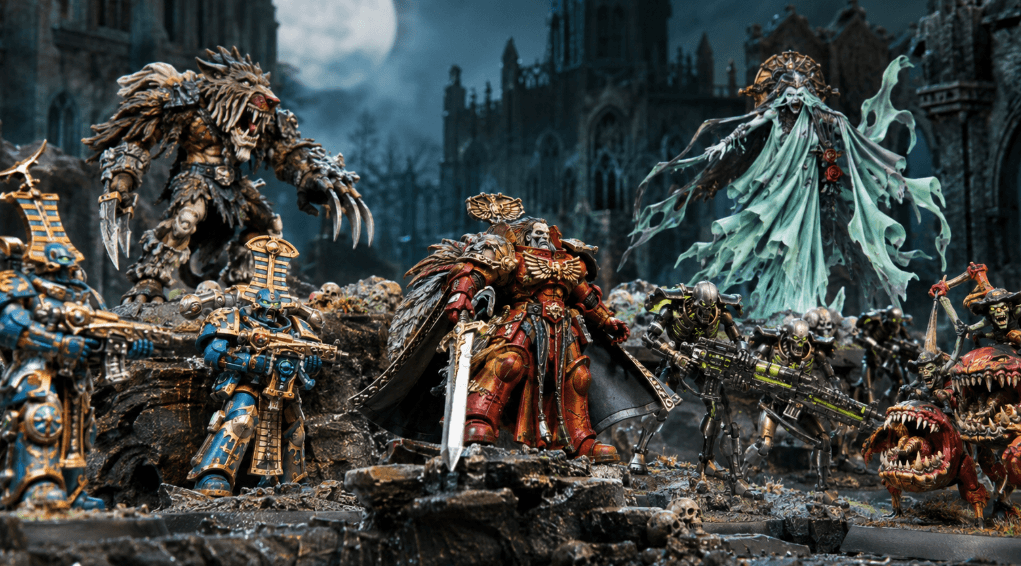

Warhammer Day 2026 coincided with Halloween on Saturday, 31 October, bringing together two celebrations centred on fantasy, horror and imaginative storytelling. To mark the occasion, Warhammer highlighted some of its most frightening miniatures, featuring supernatural warriors, undead armies and monstrous creatures from its popular tabletop gaming universes.
The selection included iconic factions from Warhammer 40,000 and Warhammer Age of Sigmar, offering collectors and hobbyists a closer look at characters inspired by vampires, ghosts, skeletons and werewolves.
Warhammer Day Highlights Six Terrifying Miniature Collections
Thousand Sons: Cursed Space Marines Trapped in Armour
Among the most unsettling figures in Warhammer 40,000 are the Rubric Marines of the Thousand Sons, warriors whose existence represents a fate worse than death.
Once powerful Space Marines, these soldiers have been transformed into dust and corrupted souls permanently imprisoned within their power armour.
Controlled by sorcerers using the supernatural energies of the Warp, Rubric Marines operate as relentless warriors with little remaining individuality.
Their enchanted weapons and seemingly unstoppable advance make them particularly frightening opponents on the battlefield.
Blood Angels: Vampiric Warriors and the Black Rage
The Blood Angels bring a distinctly vampiric element to Warhammer 40,000, combining the appearance of noble warriors with an unnatural craving for blood.
Although they do not share every weakness associated with traditional vampires, their bloodlust and supernatural characteristics make them fitting additions to a Halloween-themed collection.
The chapter also suffers from the Black Rage, a devastating genetic curse that can overwhelm its warriors.
One of its most prominent characters, Mephiston, Chief Librarian of the Blood Angels, appears to have escaped the curse after undergoing the transformation known as crossing the Rubicon Primaris.
His extraordinary abilities and mysterious condition make him one of the faction’s most distinctive figures.
Necrons: Deathless Mechanical Armies
Necron Warriors resemble animated skeletons, although their bodies contain no organic material.
These ancient mechanical soldiers march into battle without fear, hesitation or mercy, driven by an unrelenting determination to destroy their enemies.
Their advanced weaponry can strip flesh from living creatures, making them among the most intimidating infantry units in Warhammer 40,000.
The Necron mythology also features the C’tan, powerful star gods whose influence extends throughout the faction’s history.
One such entity, the Nightbringer, is associated with death itself and is described within Warhammer lore as an inspiration for the familiar image of the Grim Reaper.
Warhammer Age of Sigmar Brings Ghosts and Monstrous Creatures to Halloween
Nighthaunt: Vengeful Spirits of the Mortal Realms
The Nighthaunt represent the darker supernatural elements of Warhammer Age of Sigmar.
Unlike conventional ghosts, these ethereal beings are tormented spirits capable of spreading terror and attacking the souls of living creatures.
One of their most recognisable characters is Lady Olynder, Mortarch of Grief.
Her presence embodies despair and suffering, overwhelming opponents with an intense supernatural dread.
According to the game’s lore, her influence can become so powerful that even formidable enemies may succumb to its effects.
Her spectral appearance and elaborate miniature design make her particularly appropriate for Halloween displays.
Gloomspite Gitz: Dangerous Squigs Beneath a Playful Appearance
The Gloomspite Gitz may initially appear more comical than frightening, but their armies include some of the most dangerous creatures in the Mortal Realms.
Squigs are aggressive monsters characterised by enormous mouths, sharp teeth and an almost insatiable appetite.
Frequently deployed in large groups by grots, these creatures can overwhelm opponents through sheer ferocity.
Despite their unusual appearance, Squigs are capable of inflicting devastating damage on even heavily armed enemies.
Their combination of exaggerated features and monstrous behaviour makes them a distinctive part of Warhammer’s Halloween selection.
Space Wolves: Wulfen Bring Werewolf Horror to Warhammer 40,000
The Space Wolves introduce another familiar horror theme through the Wulfen, warriors whose transformation gives them distinctly wolf-like characteristics.
Affected by a genetic curse associated with the Space Wolves’ gene-seed, these Space Marines develop heightened aggression and bestial physical traits.
Wulfen charge into combat using claws, teeth and specialised weapons, combining extraordinary speed with considerable strength.
Their appearance closely resembles traditional werewolves, making them a natural choice for a Halloween celebration.
Commemorative Miniature Marks Warhammer Day 2026
Alongside its selection of frightening characters, Warhammer encouraged enthusiasts to visit participating stores for the annual celebration.
Collectors could explore additional horror-inspired miniatures, including skeletons, zombies and other undead warriors.
The event also featured Oath Fulfilled, a special commemorative miniature created for Warhammer Day 2026.
The miniature was presented as a distinctive addition to the celebration, with the possibility that its character could become an even darker presence within the Warhammer universe.
Halloween Celebration Showcases Warhammer’s Dark Fantasy Heritage
Warhammer Day 2026 highlighted the longstanding influence of horror and supernatural mythology on the franchise’s miniature collections.
From cursed Space Marines and mechanical skeletons to spectral rulers and ferocious werewolf-like warriors, the featured figures demonstrated the variety of frightening characters found across Warhammer’s fictional worlds.
The Halloween crossover also provided collectors and tabletop gaming enthusiasts with an opportunity to celebrate the franchise’s distinctive combination of science fiction, dark fantasy and miniature craftsmanship.

George Orwell is a writer and contributor covering politics, society, culture, and current affairs. His work focuses on providing clear analysis and thoughtful commentary on the issues shaping modern Britain and the wider world, helping readers better understand complex topics.