

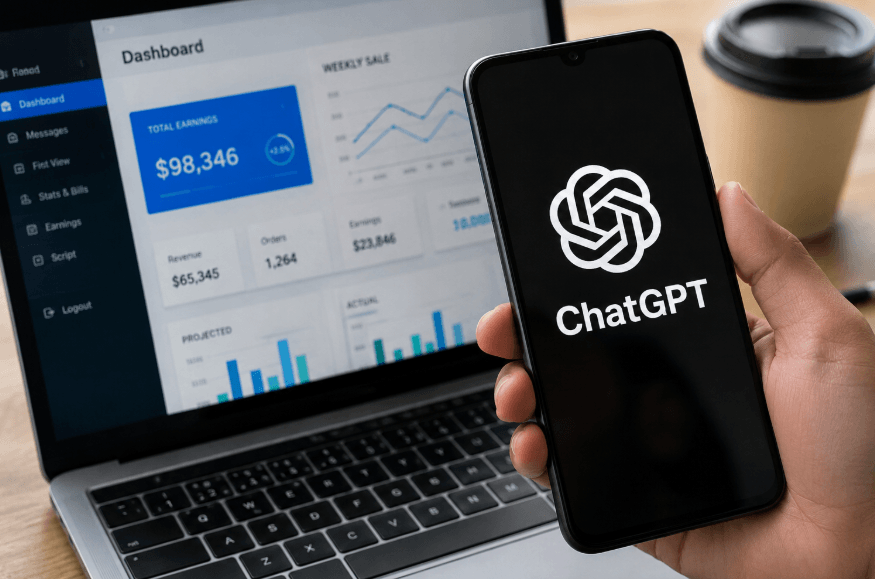
Small businesses eager to take advantage of advertising opportunities within ChatGPT risk making costly marketing decisions if they compare results directly with traditional search advertising, according to ecommerce SEO specialist Thomas Phillips, Founder of DTC SEO.
OpenAI has introduced conversion-focused advertising capabilities inside ChatGPT, marking one of the platform’s most significant commercial developments to date. The update allows advertisers to optimise campaigns towards purchases, sign-ups and lead generation rather than relying solely on click-based metrics. It also introduces flexible campaign budgets that automatically increase spending on days when the platform’s artificial intelligence predicts higher conversion potential.
The launch has prompted comparisons with Google Ads and has been viewed by many industry observers as a major competitive step in the rapidly evolving digital advertising market. However, Phillips believes the new platform presents a different opportunity rather than a direct replacement for traditional search advertising.
According to Phillips, businesses may initially see stronger conversion rates through ChatGPT, but those figures could be misleading if viewed without broader context. He argues that users interacting with AI assistants are often much further along in the purchasing journey than those beginning their research through conventional search engines.
Thomas Phillips, Founder of DTC SEO, said:
“A lot of businesses will look at their first ChatGPT campaign and think it’s outperforming Google overnight. That could be a very expensive misunderstanding.
Someone asking ChatGPT, ‘What’s the best standing desk for someone with back pain under $300?’ is much closer to buying than someone searching ‘standing desks’ on Google.
Those users have already researched the problem. They’re looking for reassurance, comparisons and recommendations before making a purchase.”
Phillips said businesses should avoid assessing advertising performance using conversion rates alone, arguing that ChatGPT and Google serve customers at different stages of the buying process.
Instead, he recommends marketers evaluate campaigns using a broader range of performance indicators, including cost per acquisition rather than click-through rate, assisted conversions across multiple channels, average order value, customer lifetime value, brand searches following ChatGPT exposure, and the number of returning customers rather than one-off purchases.
“The biggest mistake businesses could make is moving their budget away from Google simply because ChatGPT appears to convert better,” Phillips said.
“They’re serving different moments in the buying journey. The smartest advertisers will use both.”
Beyond advertising performance, Phillips believes OpenAI’s latest update reflects a wider transformation in how consumers discover products and services online, with implications extending well beyond paid marketing.
He argues that businesses can no longer focus exclusively on ranking highly in traditional search engines, as consumers are increasingly turning to AI assistants for recommendations before conducting conventional web searches.
“For years, businesses have focused on appearing when somebody searches Google.
Now brands also need to think about whether they’re visible when somebody asks an AI assistant for advice before they ever visit a search engine.
That’s why Digital PR, trusted expert commentary and genuinely useful content are becoming more valuable. AI platforms don’t simply rank websites. They recommend brands they trust.”
To prepare for AI-driven advertising, Phillips advises businesses to begin cautiously. He recommends avoiding direct comparisons between ChatGPT and Google conversion rates, noting that users within AI platforms often demonstrate stronger purchase intent.
He also encourages businesses to start with modest test budgets before reallocating significant advertising spend, while measuring assisted conversions to understand how AI influences purchasing decisions across multiple channels.
In addition, Phillips says organisations should continue investing in brand authority through trusted online mentions and high-quality content, as recognition and credibility are likely to play an increasingly important role in AI-generated recommendations. He also advises advertisers to retain Google as part of their broader marketing strategy rather than treating AI advertising as a replacement.
Looking ahead, Phillips believes success will depend less on advertising budgets and more on understanding how customer behaviour is evolving across digital platforms.
“The winners will be brands that understand where customers are making decisions, and that’s no longer happening in just one place.”

George Orwell is a writer and contributor covering politics, society, culture, and current affairs. His work focuses on providing clear analysis and thoughtful commentary on the issues shaping modern Britain and the wider world, helping readers better understand complex topics.

