

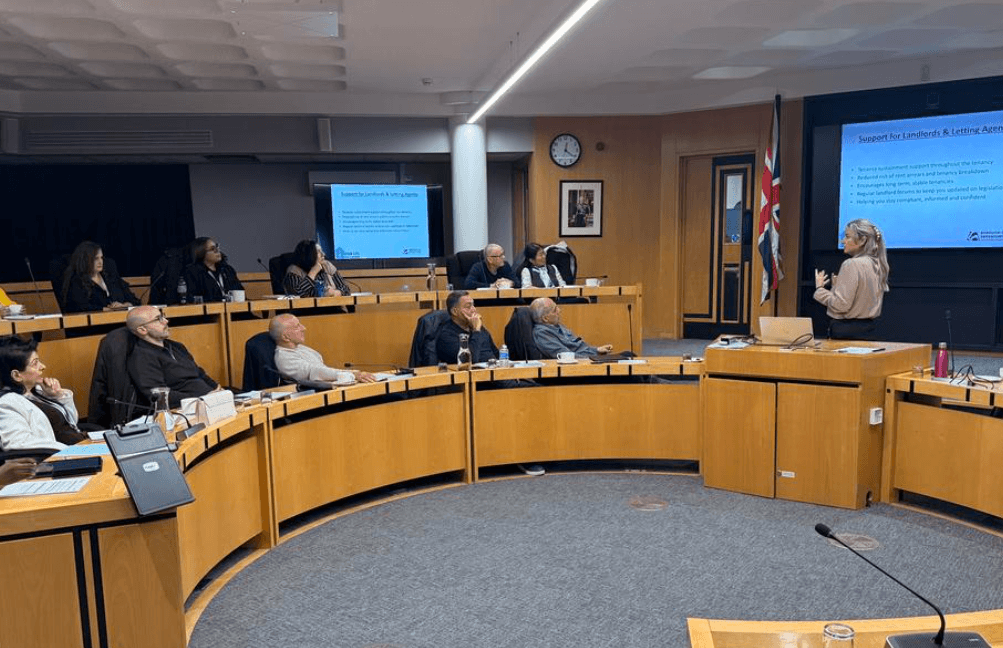
Landlords across Broxbourne have been urged to prepare for significant changes to the private rental sector, including new tenancy regulations, digital tax reporting requirements and proposed energy efficiency standards. The latest Landlord Forum, organised by Broxbourne Borough Council, brought together property owners and industry specialists to discuss the financial, legal and operational implications of the reforms.
The event, held on Tuesday, 20 October, in the Council Chamber at Bishops’ College, provided practical guidance on regulatory compliance, property management and support available through the Council’s Simple Lets scheme.
Broxbourne Council Highlights Financial Incentives Through Simple Lets
The forum opened with an overview of Simple Lets, a council-backed initiative designed to support private landlords while improving access to rented accommodation within the borough.
Under the scheme, participating landlords can receive several financial and administrative benefits intended to reduce the costs and uncertainties associated with letting properties.
These include advance payment of the tenant’s deposit and first month’s rent, a cash incentive payment and reimbursement of landlord insurance costs.
The programme also provides property inspections, a free tenancy agreement accompanied by a written statement of terms, and ongoing support aimed at helping tenants maintain successful tenancies.
Scheme Aims to Reduce Landlord Costs and Tenancy Risks
For property owners, the incentives could help ease some of the financial pressures associated with managing rental accommodation.
Advance payments may support cash flow at the beginning of a tenancy, while administrative assistance and tenancy support could reduce the burden on landlords.
The Council presented Simple Lets as an option for landlords seeking additional support in managing their properties and establishing sustainable rental arrangements.
Making Tax Digital Introduces New Reporting Responsibilities
Representatives from Thickbroom Chartered Accountants outlined the implications of Making Tax Digital for Income Tax, a major change to the way eligible landlords maintain financial records and report income to HM Revenue and Customs (HMRC).
The system requires affected taxpayers to maintain digital accounting records and submit regular updates to HMRC rather than relying exclusively on traditional annual reporting arrangements.
The requirements are being introduced in stages from April 2026, with eligibility determined by qualifying income thresholds.
Landlords Encouraged to Review Accounting Systems
During the forum, landlords were advised to assess their existing record-keeping arrangements and ensure they are prepared for the transition.
The changes could require investment in compatible accounting software and adjustments to established financial administration processes.
For landlords managing multiple properties, accurate digital records will become increasingly important for tracking rental income, allowable expenses and tax obligations.
Early preparation could help property owners avoid administrative disruption as the reporting requirements expand.
Renters’ Rights Act 2025 Reshapes Private Tenancy Rules
Propertymark, the professional body representing property agents, provided an overview of the changes associated with the Renters’ Rights Act 2025.
The legislation represents a substantial restructuring of the private rented sector, affecting tenancy agreements, possession procedures and the relationship between landlords and tenants.
The forum highlighted the abolition of Section 21 “no fault” evictions and the replacement of fixed-term assured tenancies with periodic arrangements.
New provisions also govern rent increases and the circumstances under which landlords can seek possession of their properties.
Tenants have additional rights to request permission to keep pets, introducing further considerations for landlords managing residential accommodation.
Regulatory Changes Require Updated Property Management Practices
The reforms mean landlords must pay closer attention to tenancy documentation, legal possession grounds and procedures for adjusting rental charges.
Property owners and letting agents may need to review their existing agreements and management practices to ensure compliance with the updated framework.
The changes also underline the importance of understanding legal responsibilities before making decisions affecting tenants.
Energy Efficiency Targets Put Property Upgrades in Focus
The forum also examined proposals requiring privately rented properties to achieve an Energy Performance Certificate (EPC) rating of C by 2030.
Propertymark explained that updated assessment methodologies are expected from 2027, potentially affecting how landlords evaluate their properties’ energy performance.
Broxbourne is performing above the national benchmark, with 52 per cent of properties achieving an EPC rating of C or higher, compared with 44 per cent nationally.
Nevertheless, the proposed standards could create additional investment requirements for landlords whose properties fall below the target.
Improving insulation, heating efficiency and other energy-saving measures may become increasingly important considerations in long-term property investment decisions.
Council Encourages Landlords to Seek Further Support
The Landlord Forum highlighted the growing range of regulatory and financial responsibilities facing private landlords, alongside opportunities to access council-backed assistance.
As tax reporting, tenancy legislation and energy efficiency requirements evolve, property owners will need to assess their compliance obligations and future investment priorities.
Landlords interested in joining Broxbourne Council’s Simple Lets scheme or obtaining further information can contact the team at [email protected].

George Orwell is a writer and contributor covering politics, society, culture, and current affairs. His work focuses on providing clear analysis and thoughtful commentary on the issues shaping modern Britain and the wider world, helping readers better understand complex topics.

