

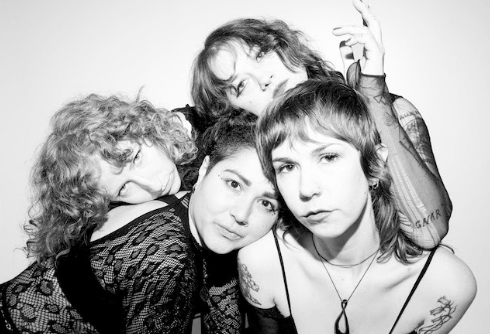
Toronto-based punk band Bad Waitress has released its new album, In The Hollow, a 10-track collection exploring personal transformation, fractured relationships and the uncertainty that follows major life changes. Released October 30, 2026, through Stomp Records, the album combines the band’s aggressive punk roots with darker post-punk arrangements, experimental textures and introspective songwriting.
The record marks the quartet’s return with a full-length release five years after No Taste, reflecting both the band’s musical development and the personal experiences that shaped its latest material.
Bad Waitress Return With a Darker, More Experimental Punk Sound
Featuring Kali-Ann Butala, Katelyn Molgard, Moon and Nicole Cain, Bad Waitress has established a reputation for combining confrontational punk rock with humor, unpredictable arrangements and emotionally charged performances.
In The Hollow expands that approach through influences drawn from art-punk, garage punk, noise rock and post-punk.
Self-produced by the band and recorded with engineer Josh Korody at Wychwood Sound in Toronto, the album balances distorted guitars and aggressive rhythms with atmospheric passages and moments of restraint.
The group’s musical influences include L7, Babes In Toyland, Wire, Yeah Yeah Yeahs and METZ, although the new material reflects a more personal direction.
Isolation and Personal Transformation Shape the Album
The album emerged from several years of personal and collective isolation, during which the band members reconsidered relationships, identity and their understanding of themselves.
Experiences involving gender, sexuality, emotional connections and personal loss became central themes throughout the songwriting process.
Rather than presenting isolation exclusively as a negative experience, the record examines how distance and uncertainty can create opportunities for reflection.
Memories of the Northwest Territories and Pacific Northwest, where some members grew up, also influenced the album’s imagery.
Forests, wilderness and expansive landscapes provide a symbolic backdrop for songs addressing emotional distance, vulnerability and change.
‘45’ Highlights the Album’s Emotional Complexity
Among the album’s central tracks is “45,” released as a focus song alongside the full-length record.
The track portrays a troubled character whose drinking, cigarettes and complicated behavior are viewed through a combination of frustration and compassion.
Rather than offering a straightforward judgment, the song acknowledges the difficulties of caring for someone struggling with personal problems.
Lyrics including “I know he wants to be a better guy” and “I wish I could give him a better life” emphasize the tension between disappointment and empathy.
The accompanying music video offers another introduction to the band’s latest creative direction.
Relationships and Contradictions Drive Earlier Singles
Previously released tracks “Lovin’ Kind” and “I Only Like You When I’m Drunk” examine unstable relationships and conflicting emotions.
On “Lovin’ Kind,” the declaration “I’m not the lovin’ kind” establishes a conflict between attraction and emotional self-protection.
“I Only Like You When I’m Drunk” explores the uncomfortable relationship between desire, resentment and intoxication.
Together, the songs demonstrate the band’s willingness to address difficult emotions without simplifying their contradictions.
Ten Tracks Blend Punk Aggression With Unconventional Storytelling
Beyond its relationship-focused material, In The Hollow moves into darker and more experimental territory.
“Galleria Shopping Centre” transforms an ordinary shopping trip into an unsettling account of intoxication and consumer culture.
“The Hunt” introduces violent imagery involving weapons, bones and storms, creating one of the album’s more ominous atmospheres.
The title track, “In The Hollow,” features cello contributions from Michael Peter Olson, adding an atmospheric dimension to its confrontational spiritual imagery.
Its repeated declaration of “God is dead” reinforces themes of disillusionment, betrayal and uncertainty.
Closing Track ‘Low’ Offers a Vulnerable Conclusion
Michael Peter Olson’s cello also appears on “Low,” the album’s final track.
In contrast to the record’s more abrasive moments, the song presents an emotionally direct examination of sadness, dependence and unresolved personal struggles.
The repeated words “I feel low / So low” establish a sense of vulnerability that continues through the closing moments.
Rather than delivering a definitive resolution, the song leaves listeners with the recognition that emotional recovery and personal growth often remain unfinished.
Bad Waitress Build on Their Toronto Punk Rock Legacy
Bad Waitress first gained attention in Toronto’s underground music scene with the 2018 release Party Bangers: Volume 1.
The band followed with No Taste in 2021, developing a heavier sound that attracted attention from alternative music publications.
New Noise Magazine characterized the group’s music as an “all-out punk assault,” while Exclaim! described its evolution as “a new type of rage.”
The quartet has since performed alongside Jack White, Subhumans, Viagra Boys and Amyl and the Sniffers, expanding its audience beyond Canada’s independent punk scene.
With In The Hollow, the band shifts some of its emphasis from confrontation toward reflection without abandoning its established intensity.
“We hope these songs offer listeners a space to process their own experiences while encouraging empathy for perspectives different from their own,” the band said.
‘In The Hollow’ Marks a New Chapter for Bad Waitress
Released through Stomp Records, In The Hollow represents a significant development in Bad Waitress’ sound and songwriting. Across 10 tracks, the Toronto quartet combines punk aggression with explorations of identity, isolation, relationships and emotional uncertainty.
The album is available on streaming platforms, offering listeners a darker and more expansive perspective on a band continuing to evolve beyond its early punk roots.

George Orwell is a writer and contributor covering politics, society, culture, and current affairs. His work focuses on providing clear analysis and thoughtful commentary on the issues shaping modern Britain and the wider world, helping readers better understand complex topics.

