
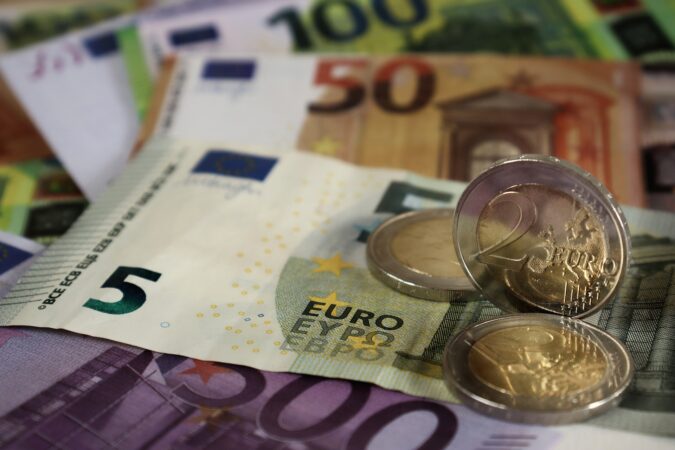
Currently, the number of payment alternatives in addition to physical money, such as credit cards and payment via apps or mobile phones, is increasing, and well-known coins and banknotes are gaining momentum.
However, “elEconomista” explains, there is data showing that despite the apparent increase in other forms of payment, physical money remains. According to the European Central Bank (ECB), nearly half of all payments, 48%, are made using banknotes. In the United States, the US Federal Reserve noted that money in circulation has reached an all-time high.
There are countries debating the issue, and some economies are testing formulas to transition to an all-digital model. The Spanish site provided a list of cases where money might be about to disappear.
Sweden:
Despite having the oldest central bank in the world, it has been leading the way in ending physical money since the beginning of the last decade. Between 2011 and 2020, Swedish citizens reduced their use of cash from 39% to 9%. With businesses, banks, and other institutions refusing to accept payments in the form of coins or banknotes, Sweden would be well prepared to be cashless, and no rural areas had resisted their demise.
With this, the Swedish government is simultaneously trying to make the transition not so fast, with citizens’ requests to keep money at home.
Norway:
Norges Bank, the country’s central bank, has revealed data that Norwegians only use banknotes or coins for between 3 and 4% of their transactions, and the country’s lack of physical liquidity is causing concerns, so even though they are on the verge of achieving full digitization, they are trying prevent this from happening.
There have already been complaints with the Norwegian Consumer Agency about the impossibility of paying for bus tickets or cafes in cash in the center of the capital, and the country’s pensioners’ association has warned of concerns that this brings to a less digitized population.
Holland:
It is one of the countries, not only in Europe but in the world, with the greatest development in this aspect, where the proportion of cash payments is less than 24%, compared to 52% in 2005, 40% in 2011 and 30% in 2015 …
Data from the Dutch Payments Association shows that card use for payments now exceeds 75% and that mobile payments saw a 30% increase last year.
In this case, banks are the biggest drivers of mass digitization in order to save costs in branches and ATMs. In the Netherlands, 89% of customers are already digital, compared to the European average of 60%.
China:
The country has become so digital in this regard that the People’s Bank of China imposes fines on public and private institutions that refuse to accept cash payments, in order to “protect the rights of citizens to use cash.”
The latest survey by the region’s central bank shows that 66% of payments in the region are made via mobile, compared to 23% in cash. In this case, there is a lower percentage of card payments: only 7% of transactions.
South Korea:
Since 2016, the country has been trying to digitize payments, so cash in circulation accounts for only 40% of the total, a figure that is an all-time low. Of the total transactions in the country, only 17% are made with physical funds.
Canada:
In the country led by Justin Trudeau, Visa said citizens are “ready to stop using cash” because Canada has “one of the highest rates of credit card payments penetration in the world (70%)”. In terms of percentage, of the total transactions, only 17% were made with physical money in 2021. Cards account for 60% of transactions and electronic payments 12%.
Australia:
The latest report from Global Payments shows that the country is accelerating the transition to physical cash, accounting for only 2% of all transactions by 2025. About 75% in 2007 to about 30% in 2019.

“Writer. Analyst. Avid travel maven. Devoted twitter guru. Unapologetic pop culture expert. General zombie enthusiast.”