Nearly £197 Million Outstanding in 2024/25 Financial Year
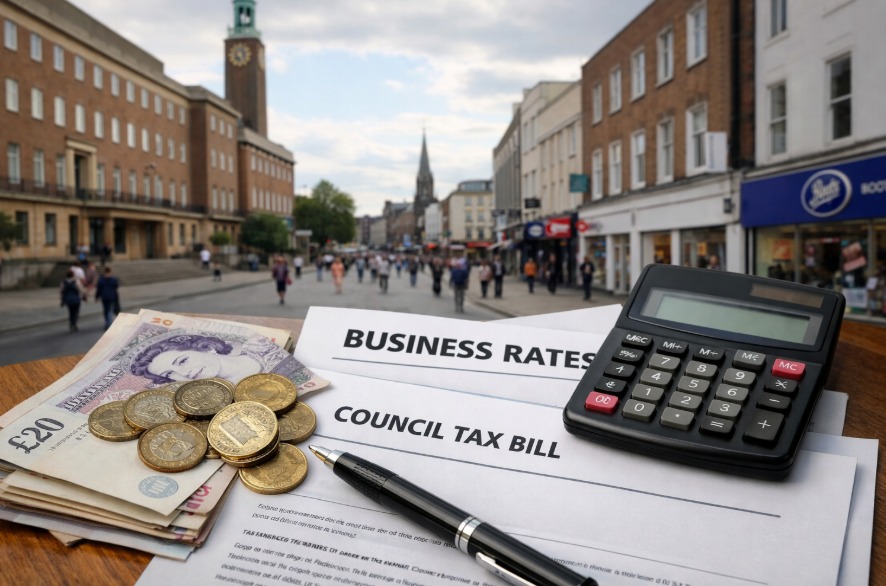
Local authorities across the East of England failed to collect almost £200 million in council tax and business rates during the 2024/25 financial year, according to new analysis by GMB Union, prompting fresh calls for improved enforcement as councils face mounting financial strain.
The union’s research, based on official government data, indicates that a total of £197.3 million went uncollected across the region. The figure represents the gap between the estimated amount councils expected to collect and the actual revenue received by the end of March 2025.
The findings come at a time when many local authorities have warned of severe budget constraints, with increasing demand for public services and limited central government funding.
Largest Shortfalls Concentrated in Key Councils
The data highlights a concentration of uncollected revenue among several councils, with five authorities accounting for some of the largest deficits.
Norwich recorded the highest level of uncollected funds at £8.8 million, followed closely by Luton (£8.7 million) and Peterborough (£8.2 million). Central Bedfordshire and Chelmsford also reported significant shortfalls of £8 million and £7.2 million respectively.
Across the region, both council tax and non-domestic business rates contributed to the total deficit, with £143.3 million in unpaid council tax and £54 million in uncollected business rates.
The scale of the shortfall has raised concerns about missed opportunities to reinvest in essential local services, particularly as councils continue to navigate financial pressures.
Union Criticises “Indefensible” Revenue Gap
Responding to the findings, the GMB Union criticised what it described as a failure by councils to secure vital income at a time when services are under strain.
Lisa Bangs, GMB Senior Organiser, said:
“The scale of uncollected council taxes and business rates across the East of England is indefensible.
“Councils often complain of being cash-strapped, but they are owed millions of pounds and are failing to collect it.
“This is money they could use to fund overstretched public services and protect council workers’ jobs and pay.
“As the new tax year approaches, we are calling on councils to put in place more robust systems to deal with those who don’t pay and ensure they collect all they can to fund frontline services.”
Pressure Mounts on Councils Ahead of New Tax Year
The union’s intervention adds to growing scrutiny of local authority finances, as councils prepare for the new financial year amid ongoing economic uncertainty.
Local government leaders have repeatedly warned that rising costs, including social care demand and inflationary pressures, are outpacing available funding. However, the GMB argues that improving collection rates could provide a significant, immediate boost to council budgets.
While councils typically achieve high collection rates overall, even small percentage gaps can translate into substantial financial losses at scale. The figures suggest that more consistent enforcement and improved systems could help recover millions in unpaid liabilities.
Broader Implications for Public Services
The uncollected revenue has wider implications for the delivery of public services across the region. Council tax and business rates remain two of the primary sources of local government funding, supporting services ranging from waste collection and housing to social care and community safety.
Failure to collect these revenues may increase pressure on already stretched budgets, potentially leading to service reductions or increased charges elsewhere.
The data used in the analysis was sourced from the Ministry of Housing, Communities and Local Government and reflects officially reported collection rates for the 2024/25 financial year.
As councils look ahead, the debate is likely to focus on balancing fair enforcement with support for residents and businesses facing financial hardship, while ensuring that essential services remain adequately funded.

“Friendly zombie fanatic. Analyst. Coffee buff. Professional music specialist. Communicator.”

