

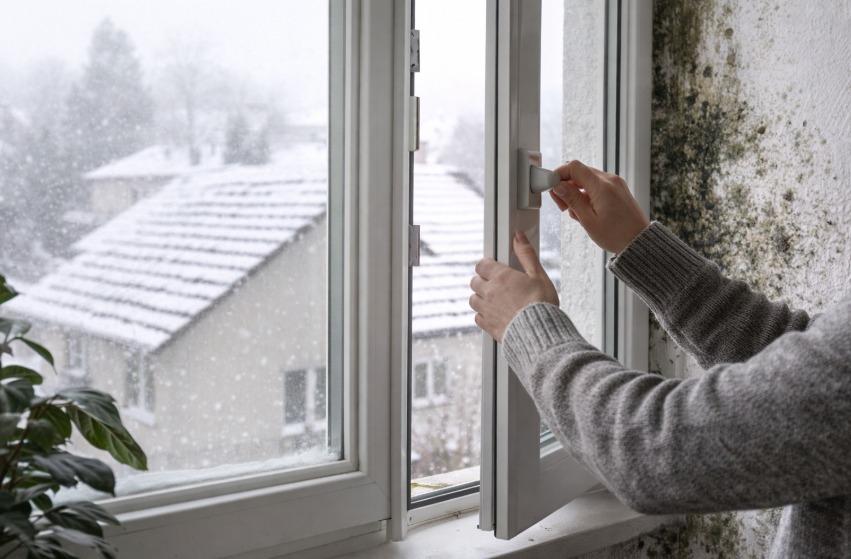
A traditional German home habit could offer UK households a low-cost way to reduce mould this winter, as new research suggests a growing number of Britons are struggling to keep damp and condensation under control.
Data cited by MyBuilder.com, an online platform that connects homeowners with vetted tradespeople, indicates that mould is becoming an increasing problem for many properties across the country. The company said one in four respondents reported the issue had been getting worse in their homes, highlighting the challenge posed by cold, wet weather and reduced ventilation during winter months.
Mould growth is typically linked to damp and condensation, and can carry health risks if left untreated. It is also one of the most common reasons homeowners seek professional support during the colder season, as moisture builds up indoors through everyday activities such as cooking, showering and drying laundry.
MyBuilder said the conditions are “prime for an explosion in mould in our properties,” warning that it can become “extremely difficult to get rid of” once established. The company noted that damp can produce “allergens, irritants, mould spores and other toxins that are harmful to health.”
The suggested solution is a German technique known as “Stoßlüften,” which translates as “shock ventilation.” The method involves opening windows fully for short bursts each day to exchange humid indoor air for fresher, drier outdoor air, improving ventilation and helping to reduce condensation.
“The German technique called “Stoßlüften” (which literally translates as “shock ventilation”) involves incorporating a very simple habit into your day. All you need to do is open your windows, at least once a day, for at least five minutes. Ideally, you’d do this twice or more – and whatever the weather!”
MyBuilder said the recommended timing varies by season. The advice is to leave windows open for between five and 10 minutes at a time in winter, up to 15 minutes in spring and autumn, and around 30 minutes in summer. While the approach may sound counterintuitive during cold weather, the company said it can help maintain air quality and reduce moisture build-up that leads to mould.
For households aiming to make an even bigger impact, the press release also highlighted a second German technique called “Querlüften,” which involves creating cross-ventilation by opening windows and doors on opposite sides of the home and leaving internal doors open between rooms. The aim is to accelerate air exchange and reduce condensation more effectively than opening a single window.
“This can not only prevent condensation, but increase the air quality and therefore health of those living in the house.”
MyBuilder said Stoßlüften is widely used in Germany and presented the method as a simple daily routine rather than a specialist intervention. An expert from MyHammer, MyBuilder.com’s sister company based in Germany, said the practice is commonplace and can deliver broader benefits beyond mould prevention.
“This is part of everyday life for millions of people in Germany. It’s vital to allow fresh air into our homes – airing your house regularly not only helps prevent condensation, and therefore mould, but is also reported to bring many health benefits. Millions of households in Germany use this method – it’s free, beneficial to your home and health – so why not give it a try?”
From a property maintenance perspective, MyBuilder said ventilation remains one of the most effective tools for managing mould, but it cautioned that homeowners should not assume condensation is always the only cause.
Andy Simms, a property maintenance expert from MyBuilder.com, said:
“It’s no secret that bad ventilation equals condensation, damp, and therefore mould. But it’s not always the cause, so while Stoßlüften and Querlüften are effective ways to aid ventilation, it’s important to check your mould issue isn’t caused by more than just bad ventilation. You might need a professional to come in and solve the problem.
“Some people may question how this method might negatively impact energy efficiency – but actually, it can help. Stoßlüften is actually considered more energy efficient than trickle ventilation – it’s a quick exchange of air which isn’t long enough for the walls to cool down, therefore heat loss is minimal as heat is retained in the building structure. Trickle vents can cause a steady loss of heat and can increase energy consumption. And releasing moisture from your home can actually help the heating process as dry air heats more efficiently than humid air
“And for some, leaving your windows open in winter weather might sound unappealing! If that’s you, we’ve put together some alternative tips to help you deal with mould in your home – but if it’s more than condensation that’s the issue, get the specialists in.”
The company also provided practical advice for households seeking to address mould without opening windows for extended periods. It recommended checking the entire home, including behind furniture and around ceilings, rooflines and ground-floor walls, where damp can go unnoticed.
Homeowners were also advised to identify the underlying cause before attempting treatment, as mould can result from leaks, structural issues, blocked gutters, breaches in damp-proofing or poor temperature control. Treating symptoms without addressing the source can lead to recurring problems and higher costs.
If condensation is confirmed as the primary driver, MyBuilder said improving ventilation through extractor fans, trickle vents, regular airing and dehumidifiers can help control moisture levels. It also warned against drying clothes indoors, noting research suggesting a single laundry load can release up to two pints of water into the air.
The guidance also advised maintaining a stable indoor temperature to prevent mould growth, with experts recommending keeping rooms at a minimum of 16C to 18C. For existing mould, MyBuilder said the affected area should be dried before applying mould killer or spray, using protective equipment such as gloves and a face mask, and ventilating the room during cleaning.
For longer-term prevention, the company suggested anti-mould paint as an added protective layer once the affected area has been properly treated.
The findings referenced in the press release were based on research conducted by Opinium for MyBuilder, via a survey of 2,000 people in 2025. MyBuilder said it operates across the UK, with more than 40,000 active tradespeople and around 150,000 jobs posted every month, and forms part of the Instapro Group, a European building and home trades marketplace.

“Friendly zombie fanatic. Analyst. Coffee buff. Professional music specialist. Communicator.”

