

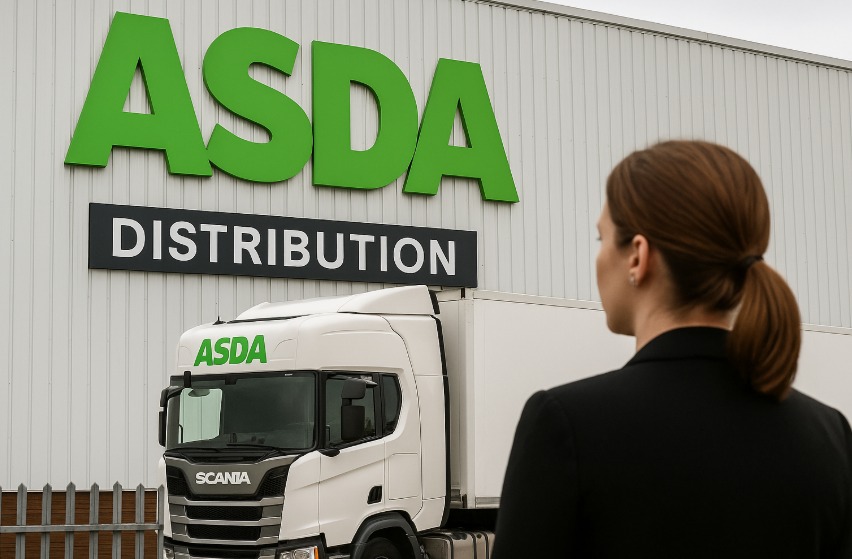
Nearly 1,000 Asda distribution managers have achieved a historic milestone after voting to bring their pay and conditions under a collective agreement with the GMB union — a move hailed as a major breakthrough for workplace representation within one of Britain’s biggest supermarket groups.
The decision means 980 managers, including shift and department leaders across 23 Asda distribution sites nationwide, will now have their employment terms negotiated through the GMB. The ballot was officially authorised by the Central Arbitration Committee, the statutory body responsible for overseeing trade union recognition in the UK.
The outcome marks the first time this group of Asda’s management-level employees has secured collective bargaining rights, signalling a growing appetite among middle-tier staff for stronger workplace representation amid corporate restructuring and investor pressure.
Union Applauds ‘Equal Seat at the Table’
GMB National Officer Nadine Houghton said the result reflected mounting frustration among Asda’s distribution managers and a desire for a stronger voice in company decision-making.
“Asda’s distribution managers told us they were fed up and needed a voice in the workplace,” said Ms Houghton. “This is what they have voted for. They will now get an equal seat at the table when it comes to deciding their pay and conditions. And no changes can be made without consulting the workers who make Asda’s profits.”
She added that the vote sends a clear signal to the supermarket’s private equity owners, TDR Capital, that staff will not remain silent in the face of ongoing cost-cutting and restructuring measures.
“We are clear – Asda’s owners TDR Capital are making business decisions that are deeply concerning their workforce. It is understandable that these workers are looking for ways to protect themselves from the cuts being inflicted by TDR. Asda workers create the profit, and Asda owners are extracting it.”
Ms Houghton continued: “GMB will not stand by while Asda’s workers are asked to pay the price for asset stripping and debt ladening brought on by TDR Capital. Workers voices must be heard as the business seeks to redefine itself – GMB representation secures this.”
Broader Context: Industrial Relations at Asda
The development comes amid a period of significant turbulence for Asda, which has been under the ownership of TDR Capital and the Issa brothers since 2021. The company has faced scrutiny over its debt levels, cost-reduction initiatives, and integration plans with its petrol forecourt business.
Union activity at Asda has intensified in recent months as employees across various departments raise concerns over pay, working hours, and changes to terms and conditions. The GMB already represents thousands of Asda employees, but extending recognition to the distribution management tier represents a new front in organised labour’s engagement with the supermarket giant.
Industry observers suggest the move could influence industrial relations strategies at other major retailers, particularly those operating under private equity ownership. It also reflects a broader trend of managers and professional staff turning to collective representation to navigate uncertainty in highly leveraged corporate environments.
Implications for Management and Ownership
While the GMB’s recognition does not immediately alter existing pay structures, it formalises a process for negotiation and consultation between the union and Asda’s leadership on employment matters. This change is expected to strengthen employee involvement in key operational decisions affecting distribution performance, scheduling, and resource allocation.
The recognition agreement could also prompt Asda’s owners to reconsider elements of their cost management strategy as union oversight expands. Analysts note that Asda’s distribution network plays a crucial role in maintaining its competitive position against rivals Tesco, Sainsbury’s, and Aldi, making industrial stability a top priority.
The GMB’s latest victory underscores growing momentum for collective action across UK logistics and retail sectors, particularly as economic pressures squeeze margins and workforce morale.

“Friendly zombie fanatic. Analyst. Coffee buff. Professional music specialist. Communicator.”

